How to Manage Stress with Meditation

What is Meditation?
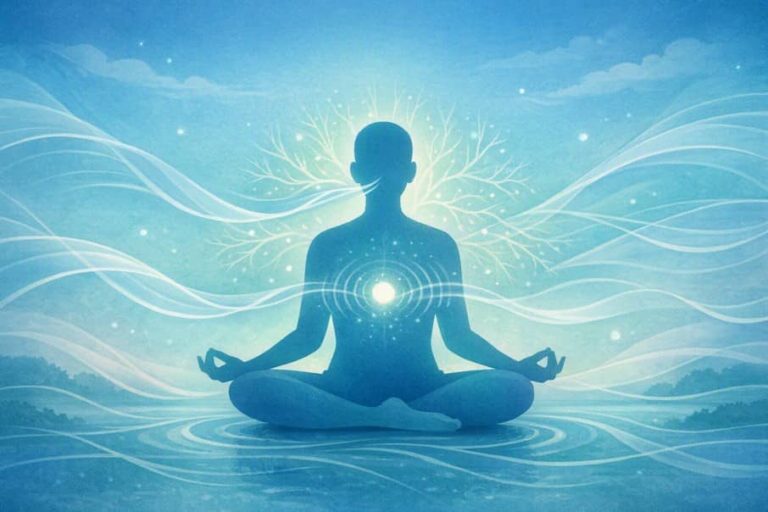
Meditation is a conscious mind-body practice that trains attention, calms the nervous system, and cultivates inner awareness.
The Purpose of Meditation
Beyond simple relaxation, the primary purposes of practice are to:
How Meditation Rewires Your Stress Response
Meditation is like a rehearsal for daily life. When sitting in stillness, your mind will naturally drift toward worries or distractions. Every time you notice your mind drifting and gently bring it back to your breath or mantra, you train the exact mental muscle needed to catch automatic stress reactions as they happen in real time.
Preparing Your Meditation Environment

Creating a dedicated space signals to your mind that it is time to transition from outward activity to inner quiet. Set up your space beforehand so physical discomfort or ambient distractions don’t pull you out of practice:
Step-by-Step Meditation Sequence
Step 1: Energize the Body. Spend 5 to 10 minutes doing gentle exercise, stretching, or Yoga Sun Salutations

Why do this? — Gentle movement wakes up the physical system (especially during early morning hours), increases blood flow to maintain alert focus, releases physical tension to make sitting still easier, and shifts the brain from a groggy state into present awareness.
Step 2: Establish Your Breathwork.
Once seated comfortably, use patterned breathing to anchor your attention and ease into deeper levels of consciousness. Choose one foundational technique:
The 4-7-8 Breath Technique (Dr. Andrew Weil): Inhale for 4 counts, hold for 7, and exhale for 8.
Yogic Breath: Take five slow, deep breaths, placing primary focus on a slow exhalation. Next, inhale with an open mouth, double-exhale, then tense and relax the body. Repeat twice.
Step 3: Choose Your Focal Point & Practice with Emotion. Once the body and breath are settled, select a tool to quiet a busy mind. Meditation is not visualization or creative thinking. Choose one anchor:
Option A Focus— Set an Intention: Give your body or mind a simple instruction for the session, such as sending relaxation to sore muscles or settling into peace.
Option B Focus— Select a Mantra or Affirmation: Repeat OM (pronounced AUM, the primordial sound of the universe) focusing on sound vibration, or a healing affirmation like “I am capable and confident that I can heal my body, mind, and spirit.” Even repeating simple words like relaxed, happy, and satisfied can be an effective affirmation.
Practice Meditation with Emotion? Always pair your word or focus with genuine feeling. The mind responds to the emotional state behind words—not just mechanical repetition.
Step 4: Ending Your Meditation
Return to an awakened state slowly to protect your nervous system:
Building Your Routine: Timing & Consistency Tips.
Daily Goal: Start with 20 minutes in the morning and 20 minutes before dinner. This provides the minimum foundation needed to build a lasting habit and see real-world results.
Optimal Practice Times: The ideal times to meditate are early morning (between 4:00 AM and 6:00 AM) and late afternoon (around 4:00 PM). Practicing at these designated hours aligns the mind with natural circadian rhythms when the environment is quietest. Going to bed early helps facilitate a consistent morning routine.
Long-Term Growth: Gradually increase practice time as consistency builds. Periodically joining an extended session (such as a monthly 3-hour meditation) deepens resolve and leaves a lasting positive effect.
The Quiet Mind in Daily Life
Ultimately, learning to quiet the mind isn’t just about sitting in silence—it is about how you experience the rest of your day. A quieter mind creates a peaceful space where decisions become easier, free from the noise of confusion and self-doubt. It allows you to move through life at a gentle, unhurried pace, fully present for the moment you are in. Most of all, when the mental chatter clears, you open your eyes to the inherent beauty that has been around you all along—allowing you to live, serve, and simply be with greater joy.